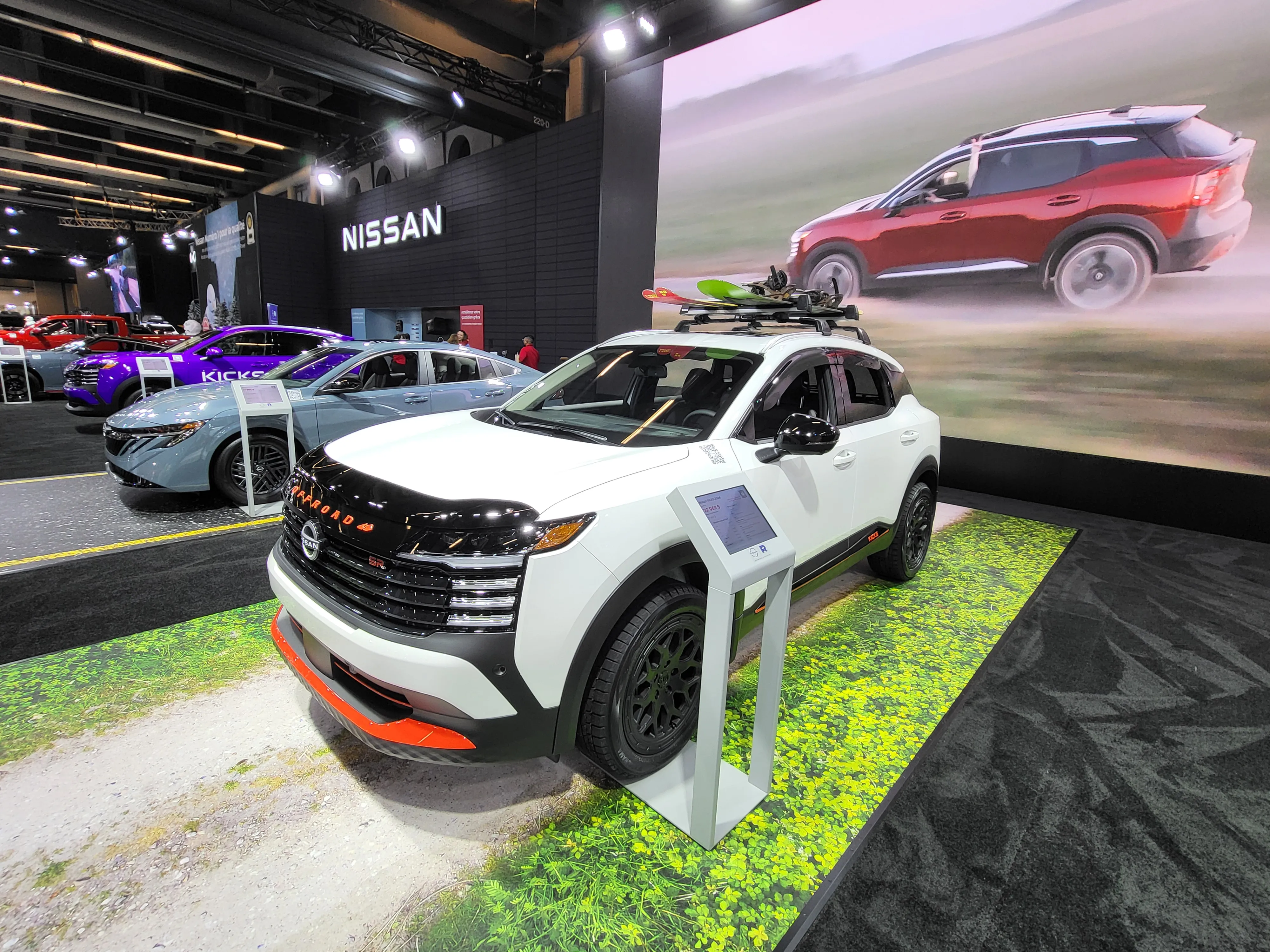
Nissan Wheel Stands
A solo-built digital wheel stand system for the Canadian auto show circuit. Sanity CMS, per-show deployment pipeline, and bilingual support across 6 cities and approximately 15 vehicles per show.
| Client | Nissan via Kubik |
| Role | Interaction Designer. UI Design, Front-End Development, CMS Architecture |
| Deliverable | React display app + Sanity CMS + operator dashboard, deployed on iPad Pro kiosks |
| Venue | Canadian Auto Show Circuit 2026: Montreal, Toronto, Calgary, Quebec City, Edmonton, Vancouver |
Overview
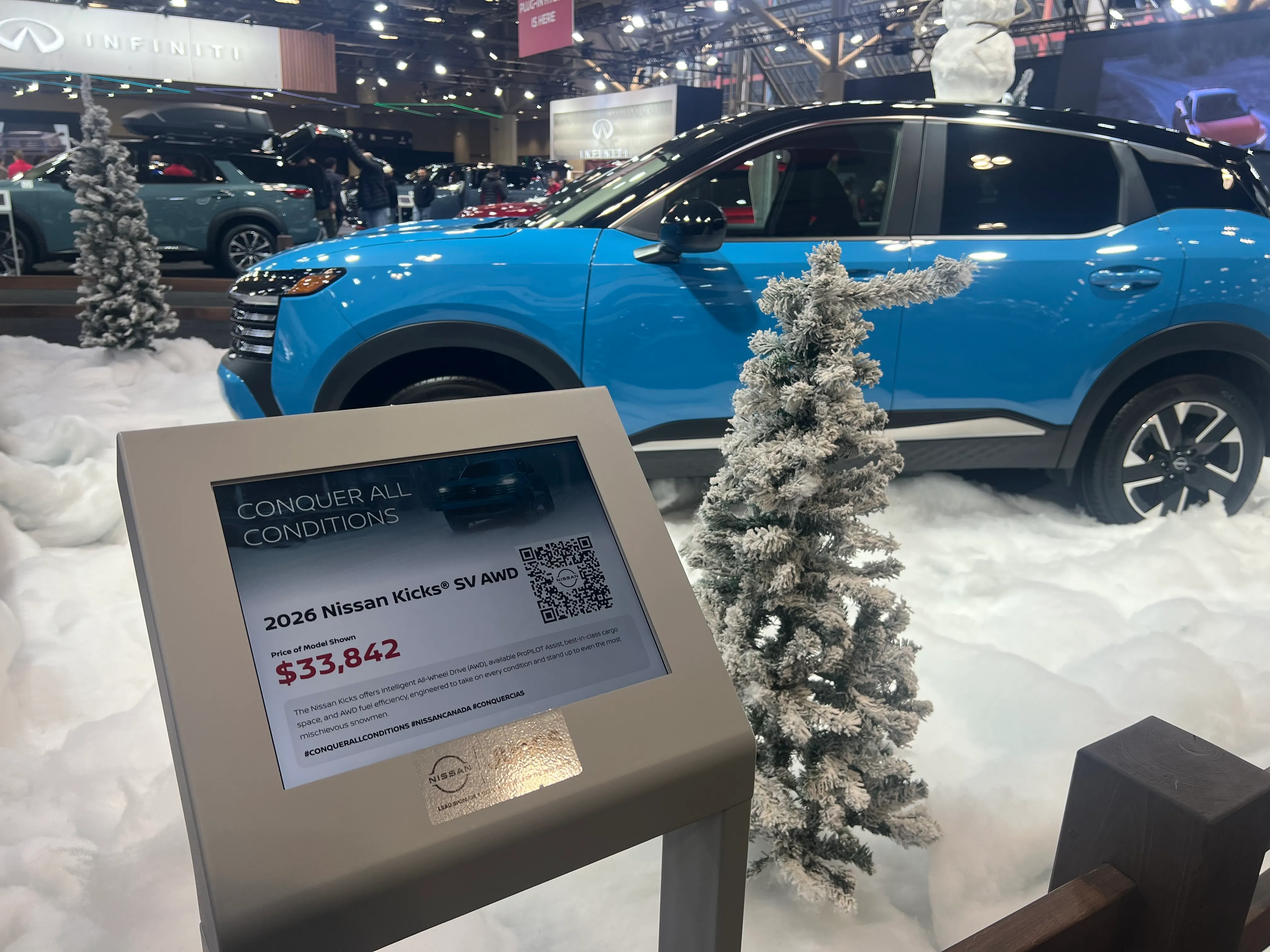
A wheel stand is the display unit positioned beside a vehicle on an auto show floor, traditionally a printed paper graphic insert. Kubik produces digital wheel stand applications for several auto clients each year, replacing static print with a connected, CMS-driven display on an iPad Pro.
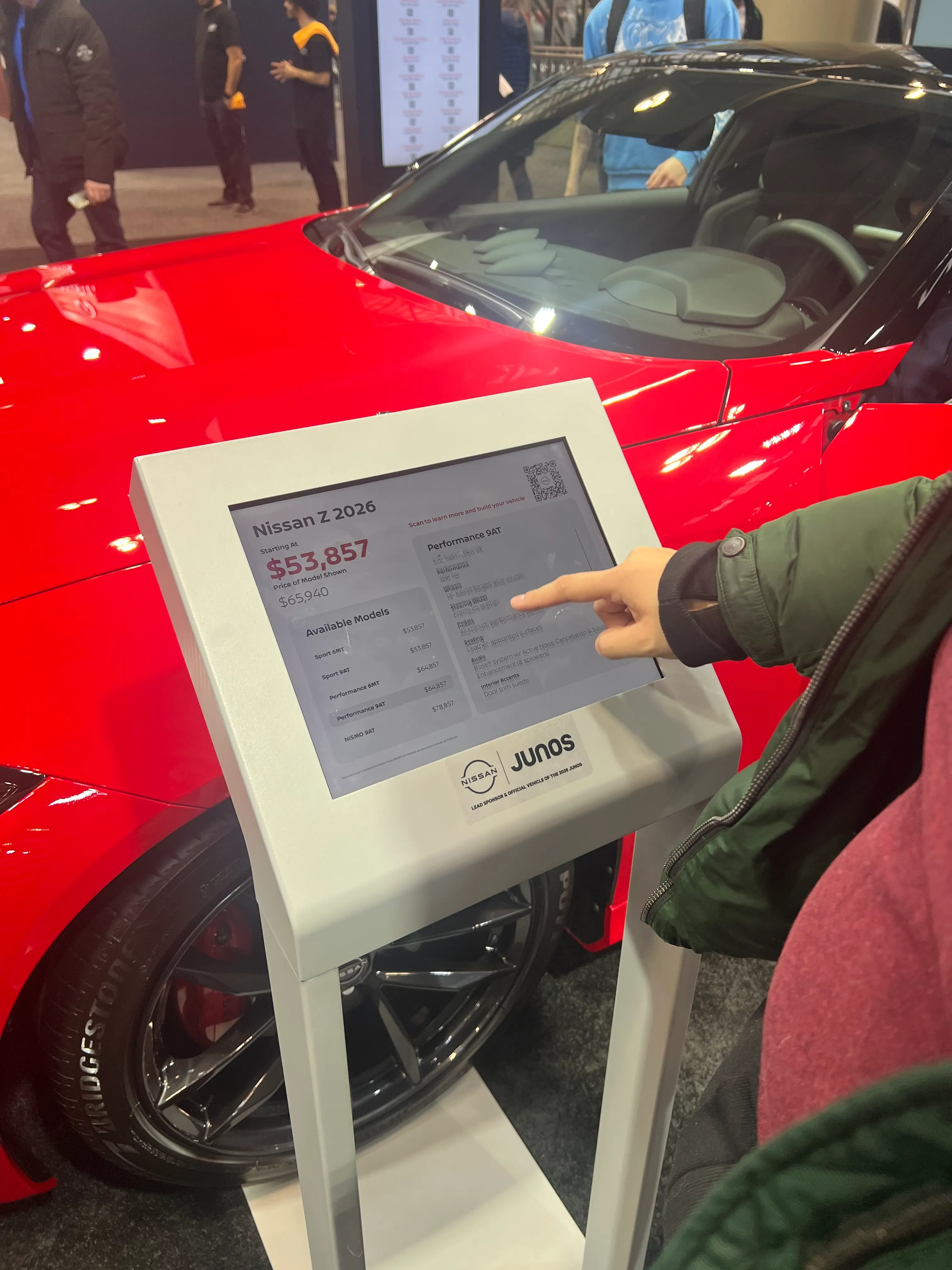
In 2026, Nissan ran the full Canadian auto show circuit: Montreal, Toronto, Calgary, Quebec City, Edmonton, and Vancouver. Each show displayed approximately 15 vehicles, each with its own tablet, its own pricing, and its own regional configuration. The same system also underpinned wheel stand deployments for BMW and Mini in 2026.
This was a solo initiative. After identifying significant inefficiencies in the existing Nissan wheel stand application (a previous system I had designed but not developed), I audited the feature set, stripped it back to what was actually being used, and rebuilt the entire solution from scratch.
The Challenge
Legacy bloat
The existing app had accumulated features that weren’t being used, a complex CMS population process, and required the client to supply images and data well beyond what the display actually showed.
Show-to-show variation
Every show had different vehicles, different provincial pricing, and different language requirements: Montreal and Quebec City in French, all others in English.
Non-technical operators
Show floor staff needed to assign vehicles to specific tablets without accessing the CMS or requiring developer support on-site.
Show floor Wi-Fi
Auto show venues share the same unreliable network reality as trade shows. The app needed to keep displaying if the connection dropped mid-show.
Approach
Identifying the Problem
The existing Nissan wheel stand app had been designed to show a lot: hero images, detailed feature breakdowns, marketing copy, and more. In practice, visitors were reading vehicle names, trim levels, available models, pricing, and key specs like drivetrain and fuel economy. The rest was noise.
Populating the CMS year-over-year required the client to gather and supply assets they weren’t using, and the internal process of updating the app for each show was more time-intensive than it needed to be. The solution wasn’t to improve the existing app. It was to replace it with something purpose-built.
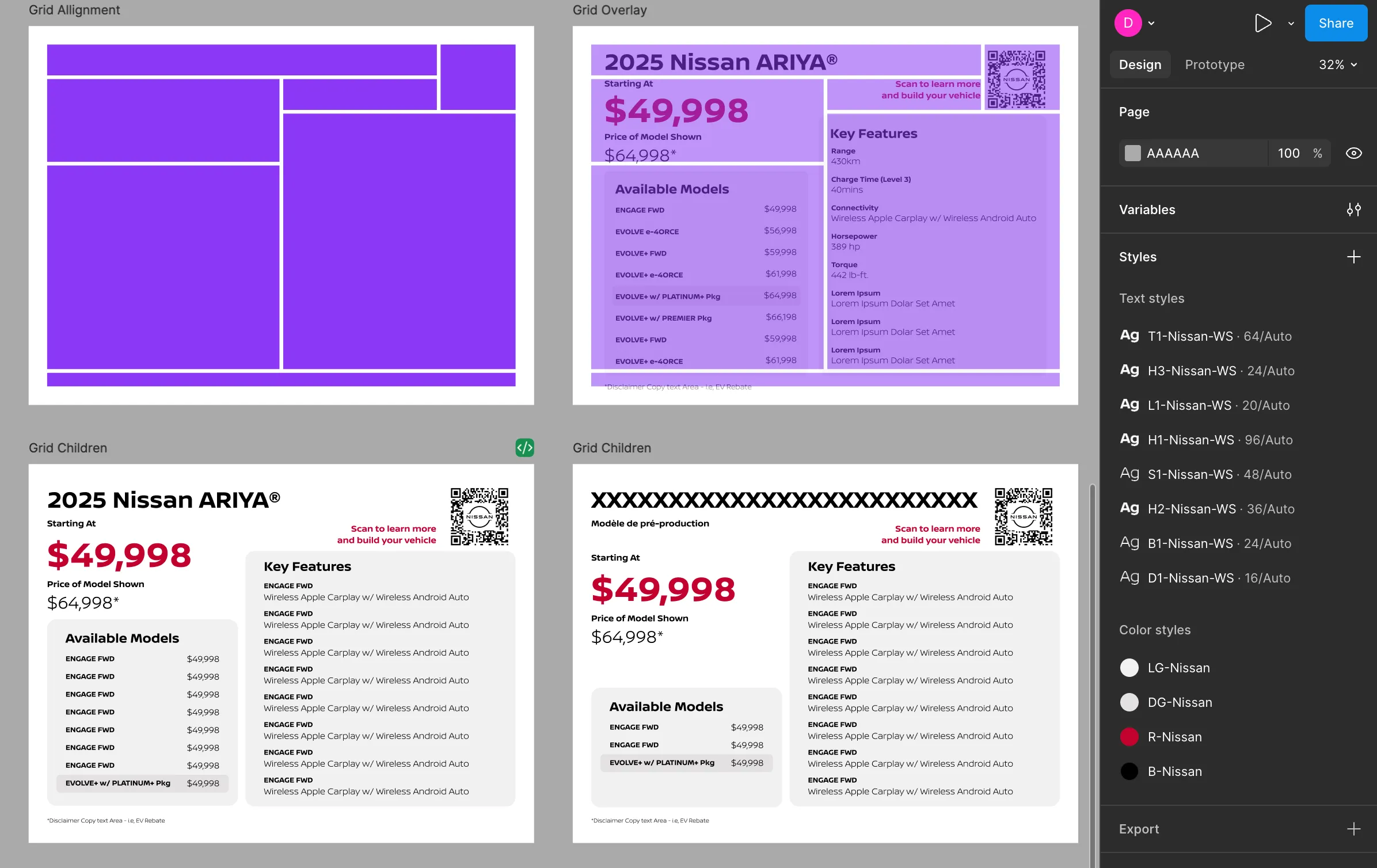
The rebuilt app focused exclusively on what Nissan’s displays actually communicated: vehicle name, trim, available models and prices, key features, display model pricing, and legally required disclaimers. Nothing more.
Design
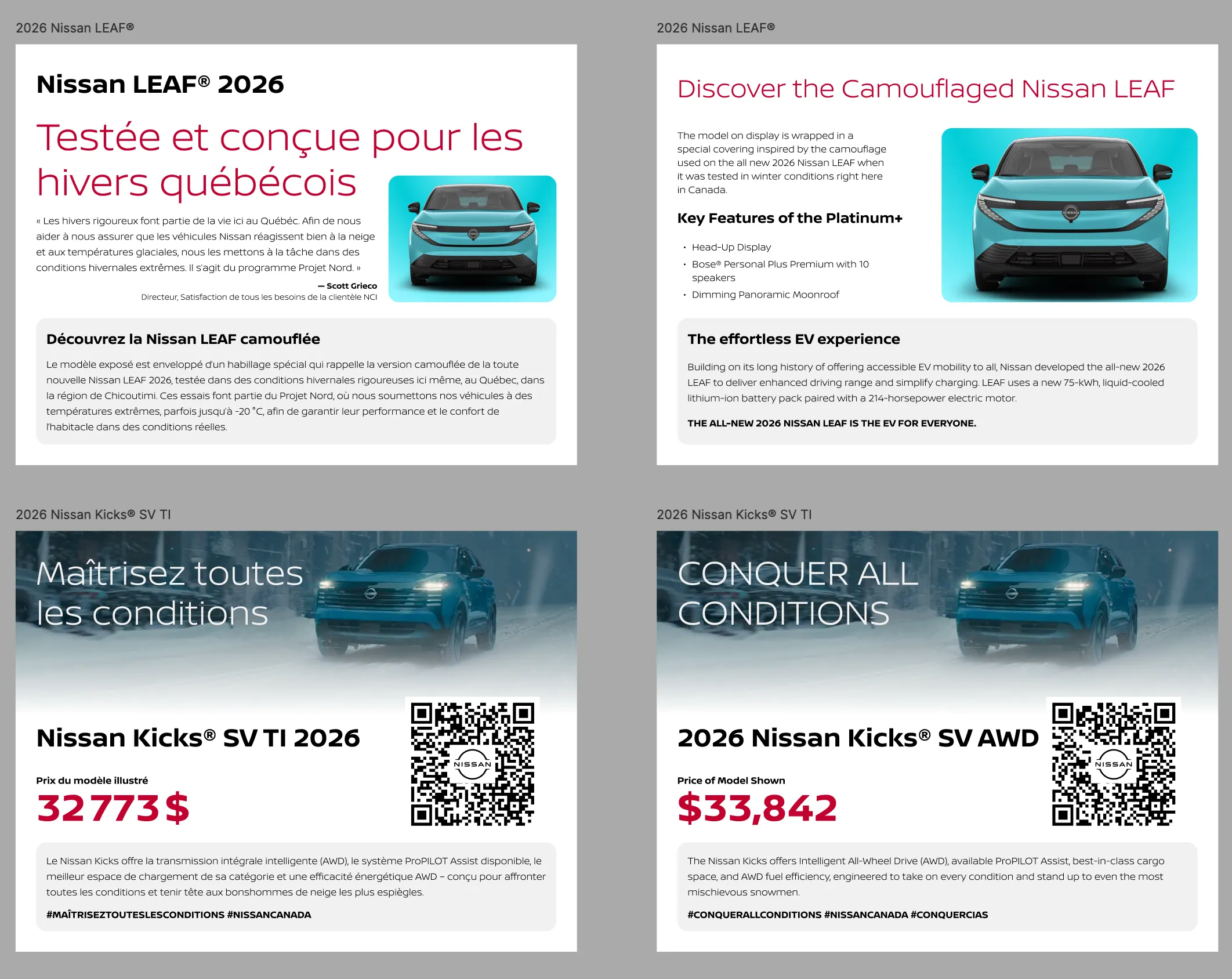
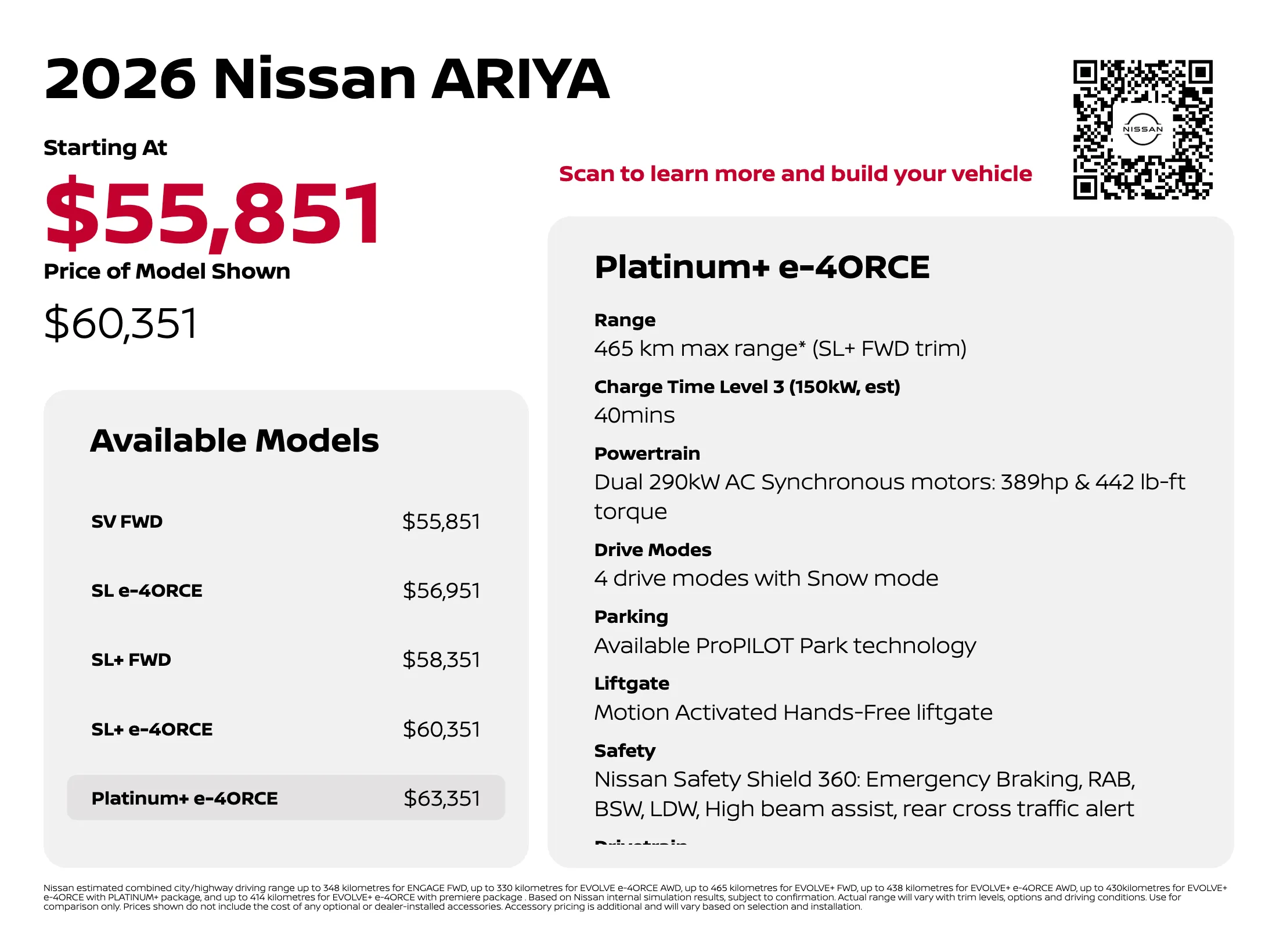
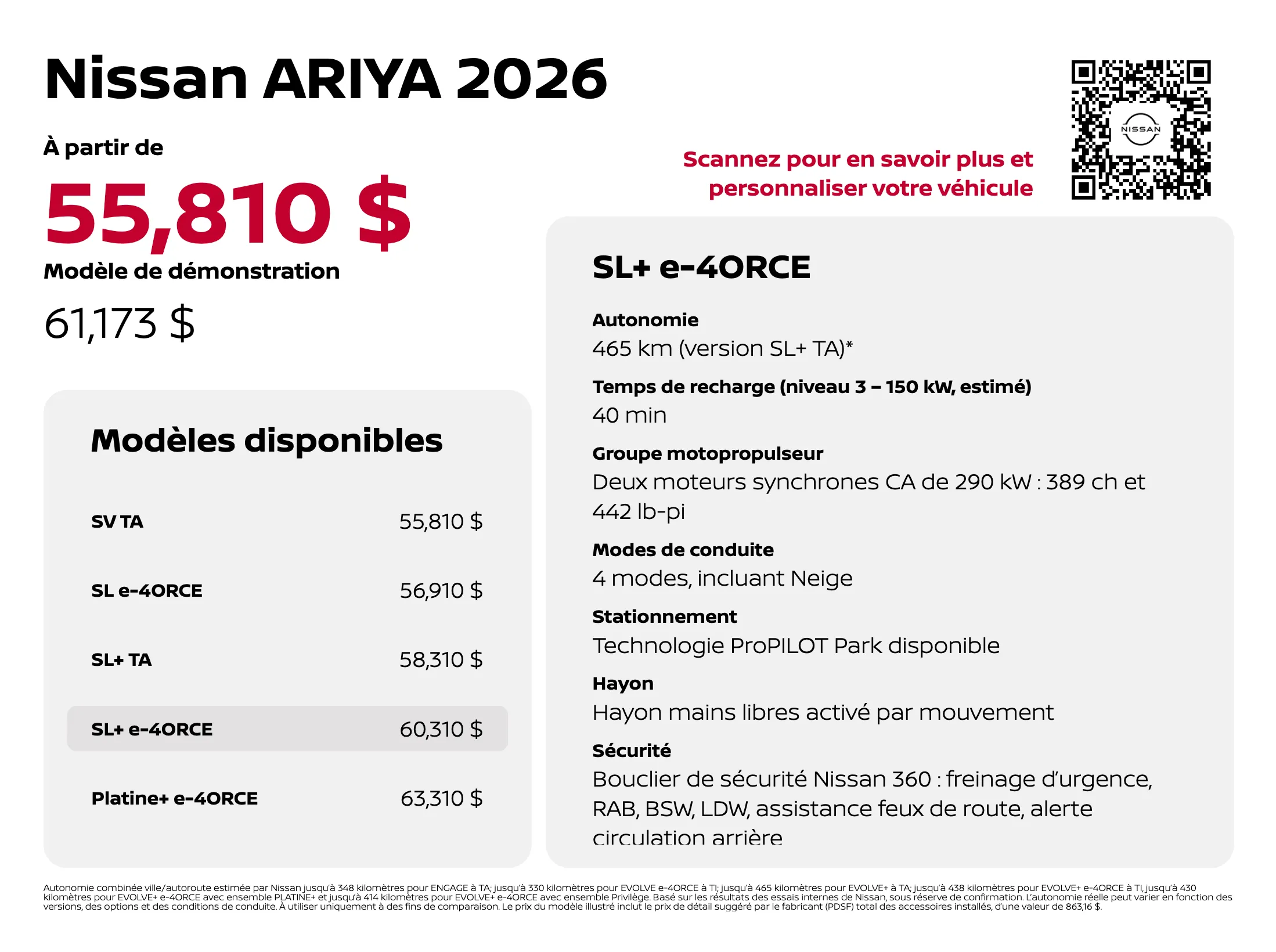
Designed the display layout in Figma through client revision rounds and French language mock-ups. All wheel stand displays are bilingual across the circuit: Quebec City and Montreal shows run in French, all other cities in English. Designed and reviewed both language variants before development began.
Once the design was locked, the Figma file was loaded into the project repo and used as a direct reference for development via Figma MCP. The app structure, CMS hookup, and dashboard were built with Claude Code, with the Figma design as the specification. Output was then tweaked to achieve a 1:1 match with the design.
Designed the dashboard interface directly in CSS, a deliberate choice to keep full control over a tool that needed to be operationally clear and mistake-resistant.
CMS Architecture
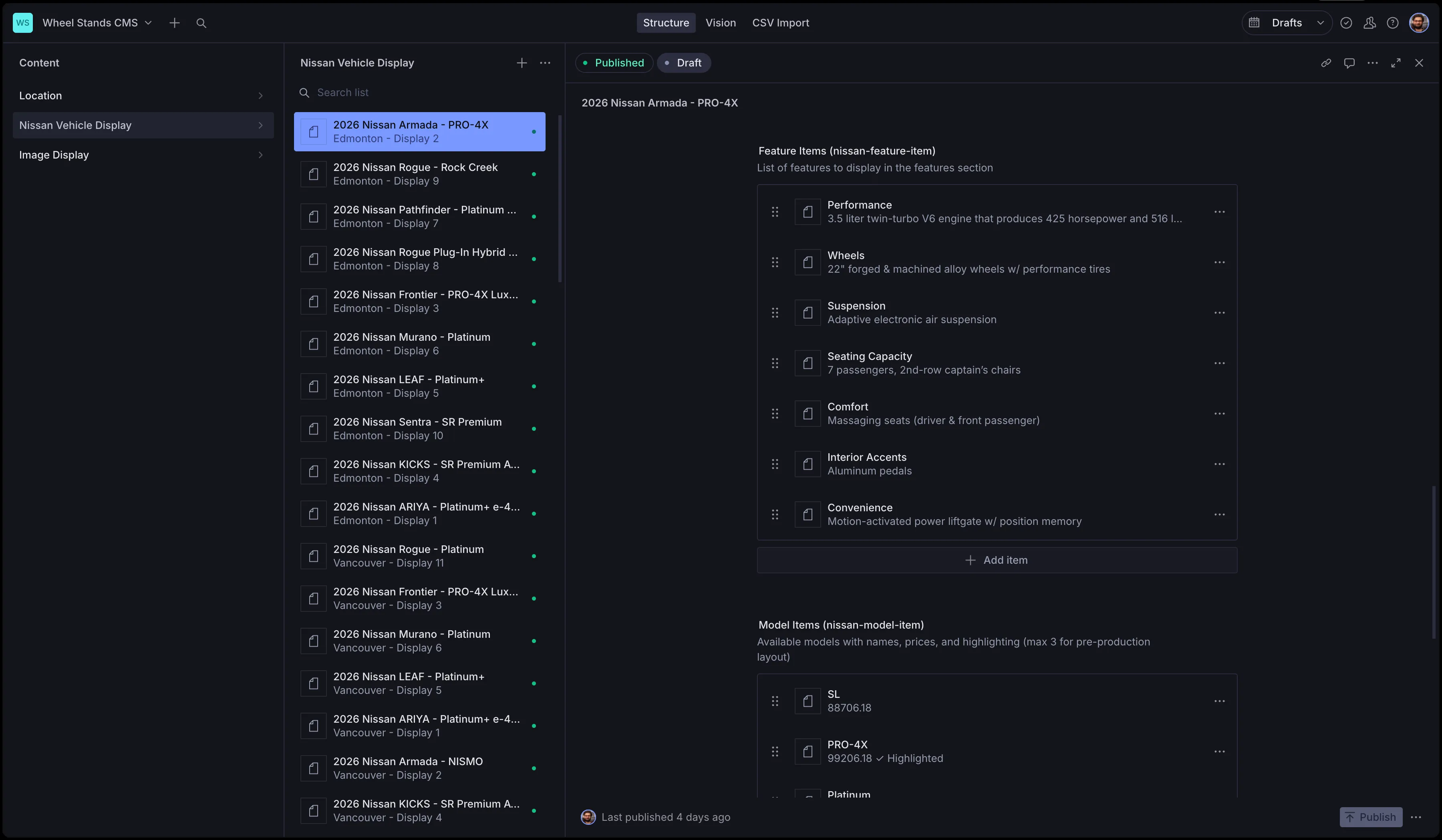
Chose Sanity CMS for its structured content model and flexible import capabilities. Configured the schema to reflect exactly what the display needed (no more), keeping the data model lean and the population process fast.
The client’s input format was an Excel file provided by Nissan’s head office, containing vehicle specs, pricing, and disclaimers for each show. Rather than requiring manual CMS entry, a Sanity import pipeline was built to ingest the Excel file directly and populate the full content set. The process was tested and refined through each show cycle.
Language and regional pricing were handled at the show level. Each show in the CMS was configured with a language setting: French for Quebec City and Montreal, English elsewhere. Vehicle pricing was entered per-province, reflecting the different MSRP figures Nissan provided for each market.
For each show, published a new version of the app to a password-protected production URL. The client reviewed the live deployment and submitted any corrections (most commonly pricing updates from their head office) before the show opened.
Operator Dashboard
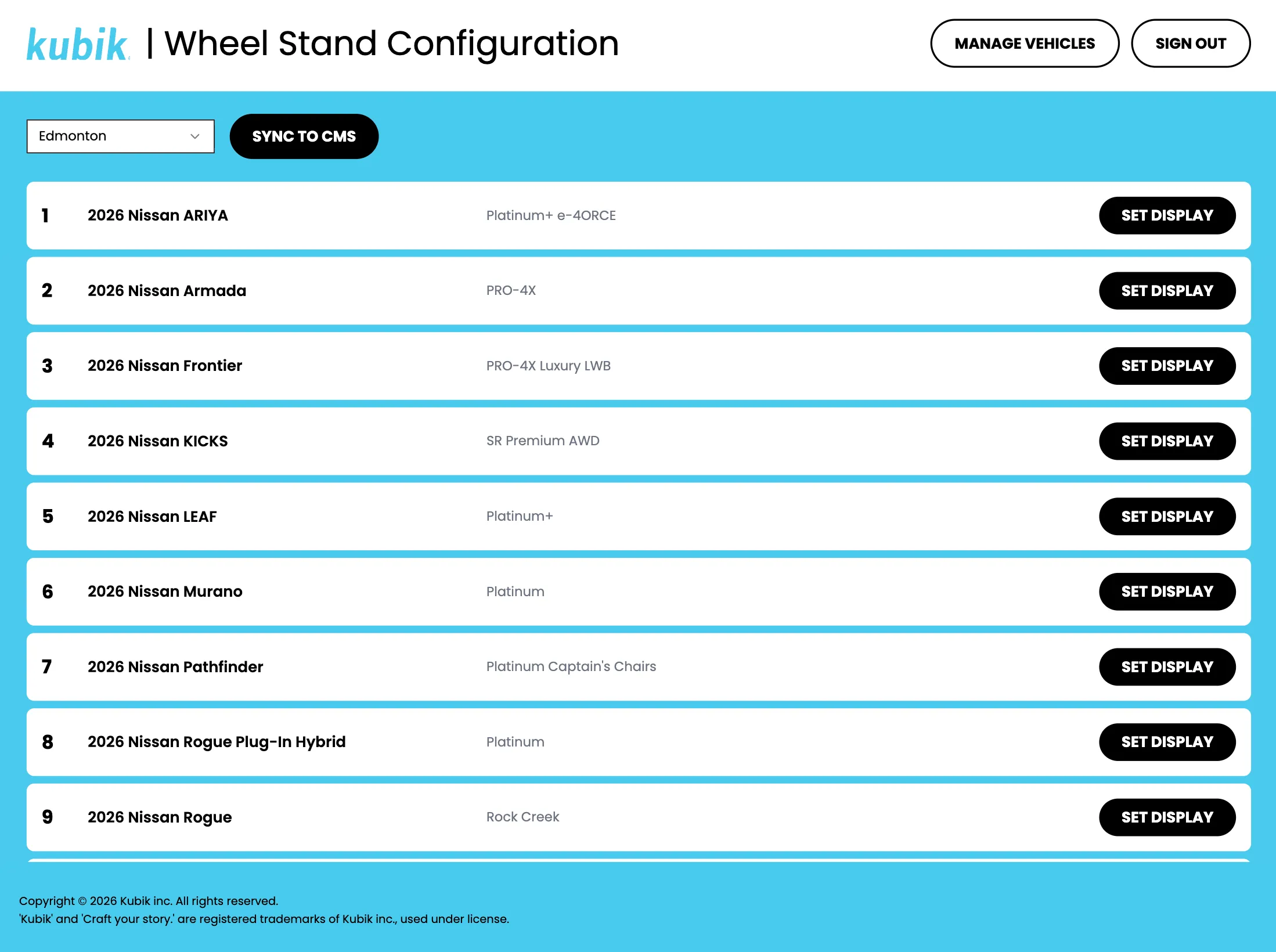
A separate operator dashboard was built to handle vehicle-to-tablet assignment on the show floor. Show staff could select a show from a dropdown, then assign any vehicle to the tablet in front of them, no CMS access required, no developer involvement.
Each display included a hidden five-tap area to return to the dashboard, invisible to show visitors but accessible to operators setting up or reassigning tablets. This prevented accidental exits while keeping the management interface available without any physical button or visible control.
Locked the production URL with a password and loaded it in Kiosk Pro on guided access mode, keeping the iPad Pros fully locked to the application with no access to the home screen or other apps.
Outcome
The rebuilt system reduced the per-show CMS population effort significantly, both internally and for the client. By eliminating unused features and replacing manual data entry with an Excel import pipeline, the process of going from client spreadsheet to live deployment became a fraction of the time it previously took.
The system ran across all six shows on the 2026 Canadian circuit without incident. Content caching meant that intermittent show floor Wi-Fi had no impact on display continuity; tablets kept showing the last fetched content regardless of connection state.
Wheel stands are an ongoing annual engagement. The system is designed to be re-deployed each year with a new design skin and updated vehicle data, with the CMS and dashboard infrastructure carrying forward.